“The Chinese language is the oldest written language in the world with at least six thousand years of history. Chinese character inscriptions have been found in turtle shells dating back to the Shang dynasty1 (1766-1123 BC) proving the written language has existed for more than 3,000 years.”
Source
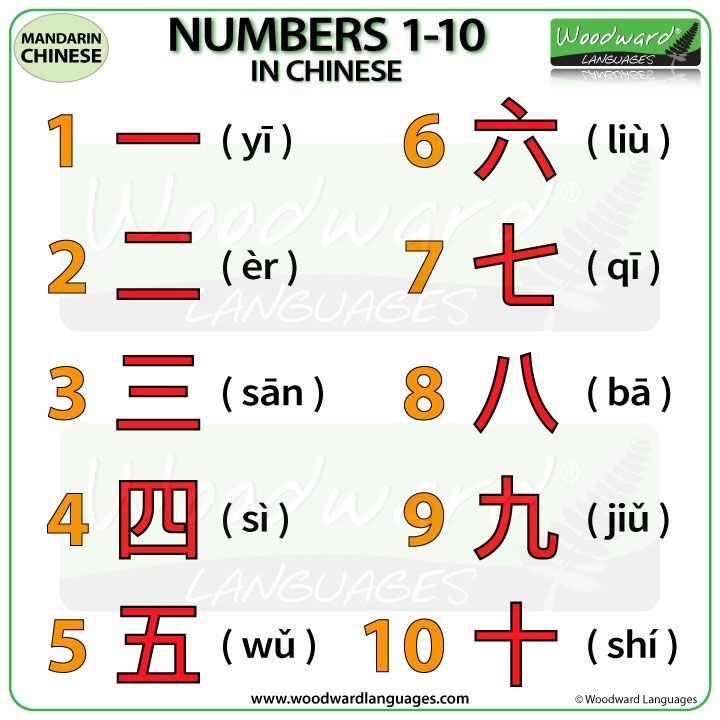
Numbers 1-10
Chinese word【Chinese symbol】(English translation)
- yī【一】(One)
- èr【二】(Two)
- sān【三】(Three)
- sì【四】(Four)
- wǔ【五】(Five)
- liù【六】(Six)
- qī【七】(Seven)
- bā 【八】(eight)
- jiǔ【九】(Nine)
- shí【十】(Ten
Introduction To The Numbers
What you see above is numbers 1-10 in Mandarin. Chinese! I’ve grown to just absolutely love everything about the Chinese language. Such a intelligent, sophisticated language. The symbols look daunting and they seem near impossible at first, but it’s not as hard as you’d think. Don’t get me wrong, it is nowhere near easy for me to try and learn. Nor will it be for anyone who takes part. But it’s not insanely difficult.
A couple things before we start. I am learning too. And while the parts I’m going to go over first I basically have nailed down, the parts I will go over after a certain point, I will take time to practice and get correct before J start any more posts. So there will be a steady rise and fall of activity over time. But I will try and learn a full Chinese phrase every week or so and post it on here, as well. Only during downtimes, though.
Another thing, chinese is written by symbols as most know, wth pronunciations spelled with letters. I suggest you write the pronunciation along with the symbol as many times you need, either all in a row, a couple times over a couple hours or over a few days. Or a combination of both of those techniques. Then take a step back for a bit to let your brain forget about Chinese for a day or two and then find out you can write it without looking or see it in your head while pronouncing the word. That’s what I did and I have been interested in chinese since 13 years of age. If you’re passionate about learning Chinese, but haven’t had the time or patience to try them believe me when you see that symbol in your head while saying, thinking about it seeing the word, it feels empowering. Trust me.
Now when we’re speaking of the Chinese outside of the symbols, the way the words are spelled and pronounced outside of the symbols, I will have them typed out, with the symbols in brackets and the English translation in parenthesis. The format is below, Pronunciation bold, symbol italicized in brackets, English basic text:
This will be a 100% accurate guide. It may just be a bit scattered at first, but these posts are being edited as they are being posted, so it will get more professional as we move forward. I will also try to make it as comprehensive as I can. Which means what I learn, you learn. Up to the point I stop learning, you will know what I know if you decide to stick around. And I pray you do because it’s fun.
There are four posts regarding numbers 1-10, after that there will be one post explaining zero, and one hundred. And then there will be a separate page you can turn to if you wish to see what the numbers 11-999 are. I won’t bore you with more posts describing the numbers following ten because they’re all fairly simple and self explanatory. After ten, the Chinese number patterns follow a pattern that somewhat mirrors the Roman Numeral system, just not completely. You’ll get the hang of it fairly easily once you learn all ten base numbers. Seeing as how the base numbers are all used simultaneously, with no new additions, up to nine hundred and ninety-nine. The base numbers are the blueprints to the hundreds, thousands, and so forth
There is one more thing to explain before I start numbers that will make reading and writing Chinese a bit easier. The english letters you see that represent the symbols are called ‘Pinyin’ It’s the was we spell the pronunciations of the symbols. Now, let’s begin with number one.
 The World Is Ending and Hank Moody is Teaching Chinese!