
“龙飞凤舞。”
“The dragon flies and the phoenix dances”
-Chinese Proverb
Introduction
Remember nǐ and nín? Well, if you do you should remember that they are the symbols we used in ‘Hello’ formal and ‘Hello’ casual.
When you use the symbols alone they actually mean ‘You’. I’m finding out, as you’ll find out, that most symbols alone don’t mean the same thing that they mean in the context of other symbols.
You(Casual and formal)
The casual symbol that means ‘You’ would be 你。for when speaking to friends or somebody your own age.
The formal symbol that means you is 您。 for when speaking to elders or superiors. People above you.
There is a video on how to write both alone. You will notice the videos will mirror 你好 and 您好。 Just without the ‘好’。
nǐ,You(Casual)
nǐ,【你】,You(Casual)
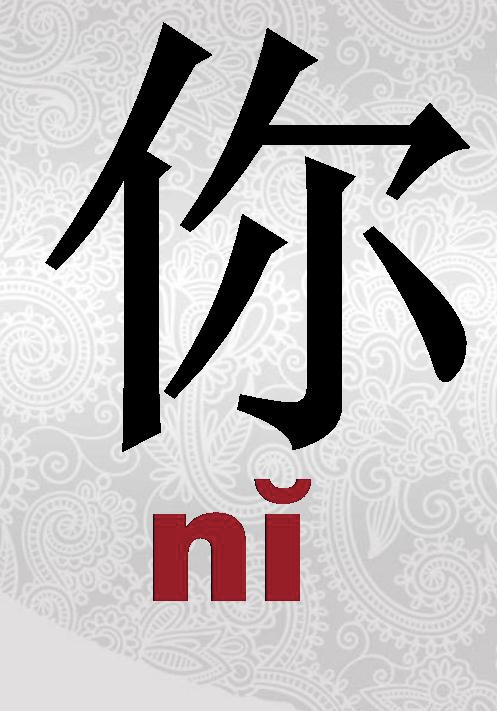
n-ǐ
nín,You (Formal)
nín,【您】,You(Formal)
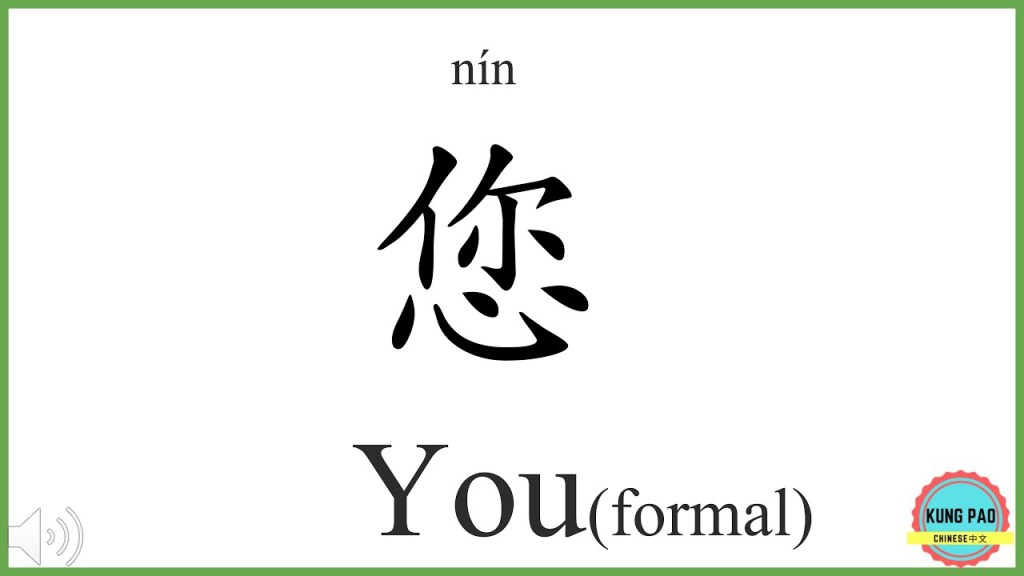
You(Plural)
nǐmen,【你们】,You(Plural)
n-ǐ m-e-n
When I say you plural, it means things like ‘You all’, ‘All of you’, etc. all of these English terms have the same symbol in Mandarin.
The Chinese language doesn’t really have plural words, they just add symbols, for example when speaking of nouns and pronouns specifically referring to people, we attach the modifier men【们】。Which makes one person into multiples. note that this only applies to nouns or pronouns referring to people.
So the plural of You? You’ve probably guessed is nimen 【你们】
Below is the video of 你们。
 The World Is Ending and Hank Moody is Teaching Chinese!