
‘握住你的手,和你一起变老。’
-“Hold your hand and grow old with you.”
Chinese proverb
Introduction
Sorry it took so long for this post but it’s not like I have any solid viewers at this point in time. But in this post I will apologize to you in mandarin.
That’s right, in this post we’ll learn how to speak and write the phrases ‘I’m sorry’ and ‘It’s okay/It’s nothing’ in mandarin. Let’s begin.
I’m Sorry(Neutral Tone)
duìbuqǐ【对不起。】 I’m sorry.
(Nineteen Strokes altogether)
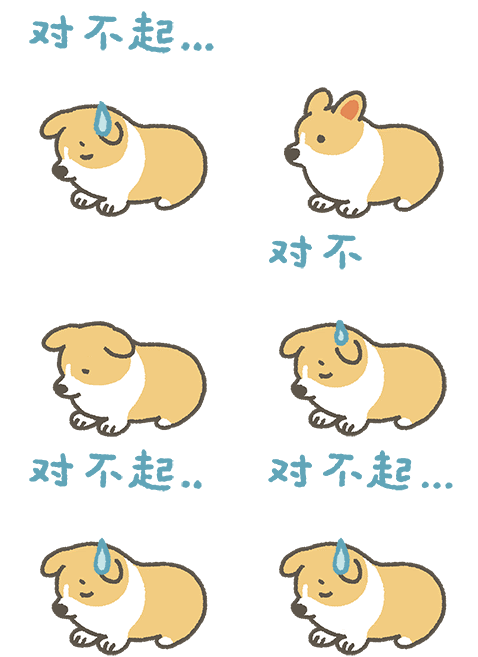
duì-bu-qǐ
These symbols have foreign meanings by themselves as well, outside of the context of other words. As I learn more about the singular symbols and what all their meanings are, I will share those with you as well.
But for now we’re just going over simple phrases. Which means either that this blog will get a lot, and I mean so much, more in depth or I will give up. But by God I will not give up. so we’re flying high on this one.
对不起 these symbols put together form the phrase ‘I’m sorry’ but you will probably see these symbols in different phrases meaning very different things. Like I said, it’s a sophisticated and extremely complicated language. But I can figure it out.
对不起 is a neutral apology, less of an embarrassed apology more of a ‘pardon me’ or an apology from one who feels unworthy.
I will show you how to stroke the symbols one at a time. I feel we can learn them easier taking baby steps.
Here are how to write the symbols for 对不起。
duì【对】
(Five Strokes)
Below is a video on how to write 对
bu【不】
(Four Strokes)
Below is a video on how to write 不
qǐ【起】
Below is a video on how to write 起
I’m Sorry (Light-Hearted Tone)
bùhǎoyìsi,【不好意思。】,I’m Sorry.
32 strokes altogether
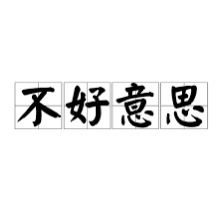
b-ù h-ǎ-o y-ì s-i
不好意思,it’s a more subtle and delicate apology, it’s literal translation is to be embarrassed, ashamed of, or self conscious.
Again I will show you how to write each individual symbol below.
bù【不】
hǎo【好】
yì【意】
si【思】
It’s nothing/it’s okay/it doesn’t matter.
méiguānxi,【没关系。】,It’s okay./doesn’t matter./ it’s nothing.
20 strokes altogether
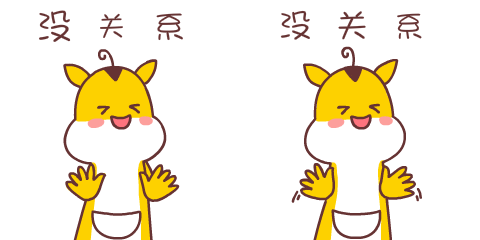
What’s the point of an apology if you don’t get an answer? I’m not going to add any negative answers at this point but I probably will throw some in later on in the blog.
Méiguānxi 【没关系】 is the answer to an apology, though most of the literal translations are terribly negative in themselves. Speaking of “it’s nothing/it doesn’t matter” it also means “it’s okay” so this is about as positive as Chinese gets, I suppose.
But let’s forget about the negativity of the phrase. It’s probably not viewed as negative in the Chinese culture. méiguānxi in itself is actually sounds very positive, but I think all the Chinese phrases sound verbally uplifting. that may just be me.
Let’s learn to write it!
méi【没】
guān【关】
xi【系】
Outro
Points to remember
- The same Chinese symbols can have different meanings in the context of other words and have different meaning by themselves. (Don’t worry, I don’t fully understand this either. Once I understand more then more will be revealed.
- The stroke order is important in writing mandarin or any other form of Chinese. Children in Chinese schools are penalized if they don’t do the stroke patterns correctly.
- The previous point I do understand it’s purpose very well. Not only has writing the symbols with the correct stroke order helped me to learn them better, it’s more of an accomplishment to write the symbols the way they’re taught.
 The World Is Ending and Hank Moody is Teaching Chinese!